Published on
Even market stalls take QR now: +85 percent
In Vietnam, VietQR payments grew 85 percent in value in the first ten months of 2025. The figure says something precise about who stays cash-only.
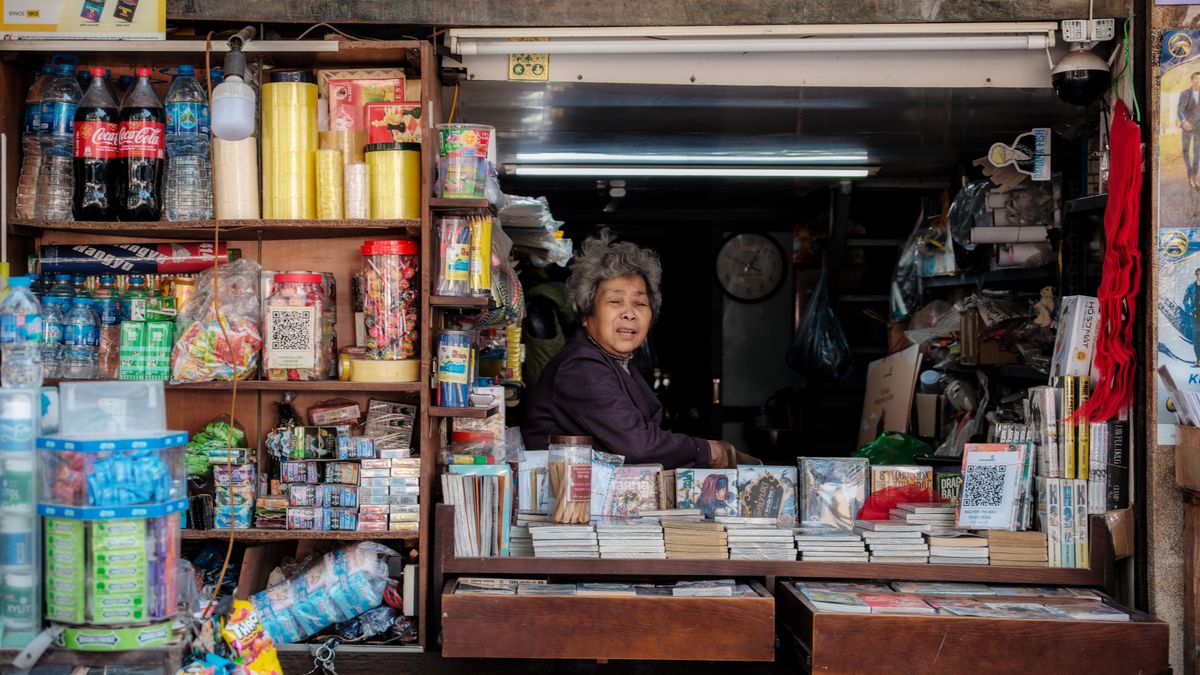
Hoa has sold vegetables for fifteen years at a market in Hanoi. Today she closes the sale with the customer scanning a code hung in front of the scales. The story is told by VietnamPlus, and the numbers behind it come from NAPAS, the national payments network: in the first ten months of 2025, VietQR transactions grew 52 percent in number and 85 percent in value.
The figure that says more: value grows faster than volume
If the number of payments grows 52 percent and their value 85, each QR payment is worth more on average than a year ago. It is not just the coffee: people scan the code for bigger amounts too — the week's shopping, a whole order.
The other figure sits in the same sentence of the article: paying by phone "began in supermarkets and has flooded into alleyways, noodle stalls, corner shops and late-night food carts". With nearly 90 million mobile banking accounts active, the customer has the phone. The wallet, less and less.
What staying cash-only costs
It is not a question of being modern. It is arithmetic:
- the customer who left their cash at home buys from the next stall over, the one with the code;
- the change to give, the note that is not there, the "I'll come back and pay later" — each one is a wait, and a wait in a queue is a customer lost;
- and there is the less visible part: every QR payment leaves a line in the bank app. A tax official quoted in the article puts it plainly: less manual bookkeeping for small vendors.
The printed QR is not enough
There is a difference, though, between the code hung on the scales and a QR done properly. The printed one only says where to send the money. The amount is typed by the customer — and sooner or later the round number arrives in place of the exact one.
A QR generated for that sale carries the total inside it. The customer scans, sees your name and the figure already written, confirms. Zero digits to type, zero digits to correct.
How Yataio does it
Yataio generates the payment QR directly on the document — at the bottom of the receipt or the order — or on its own, when you need to get paid on the spot without creating anything. In both cases the amount is already inside, and the QR is the one for the country you chose at first launch: in Vietnam, VietQR.
The money goes from the customer's bank to yours. It is a normal transfer, with the usual guarantees.
The feature is part of the Pro version. How it works, and how to spot the scams that circulate around payments, is in the guide. On the QR with the amount inside there is also a more technical article, here.